Bilabiri Kingdom Communities Cry Out Over Oil Spill Devastation
- by Elaye, Bayelsa, HSN
- about 4 hours ago
- 136 views
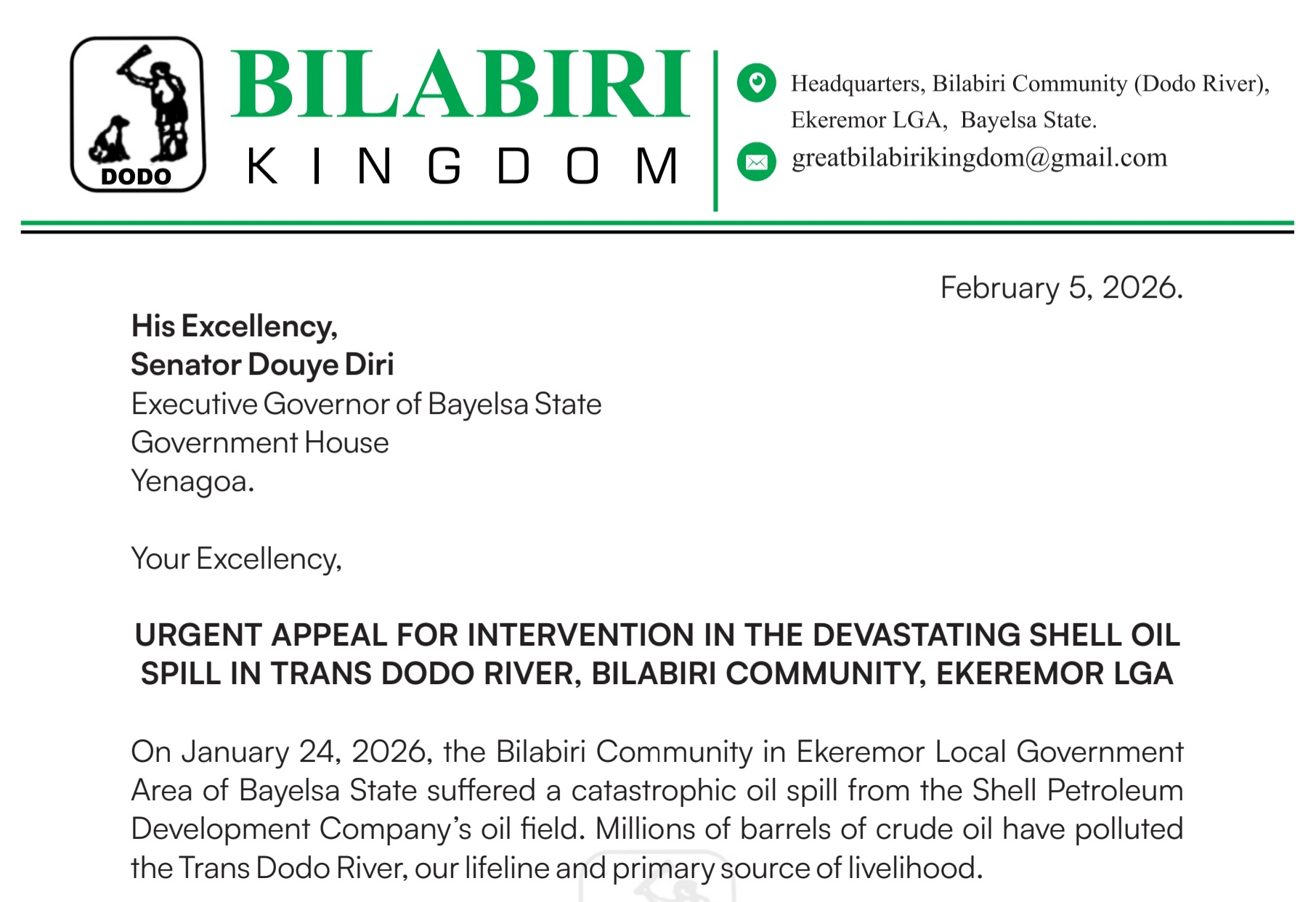
Bilabiri Kingdom communities in Nigeria's oil-rich Bayelsa State have issued a scathing press statement accusing Shell Petroleum Development Company (SPDC) of a catastrophic oil spill that has poisoned their main river, killed marine life en masse, contaminated water sources, and driven families into desperate hunger.
The spill erupted on January 24, 2026, from an SPDC-operated oil field, flooding millions of barrels of crude into the Trans Dodo River - the lifeline for fishing and farming in Bilabiri, Bilabiri 2, Glory Ama, Agotutun, Bilabiri Ilaje, Beinmo-bou, and Ebiama communities in Ekeremor Local Government Area. "The river, once a source of food, livelihood, and cultural identity, has now been poisoned. Aquatic life has been destroyed," declared His Highness Commander Abiodu Opumor, Acting Highness of Bilabiri Community, in the February 4 statement signed by kingdom leaders.
Residents report the river blanketed in thick crude slicks, with fish, crabs, shrimps, and other species dying in alarming numbers. "Fishermen report massive fish deaths; our nets and boats are stained with crude oil, leaving the river barren," Opumor added, underscoring day-3 observations in the timeline. Mangroves and wetlands - key breeding grounds and natural buffers - are suffocated, while toxic fumes choke the air and oil seeps into riverbank soil, halting farming.
Polluted water now poses dire health risks, including skin rashes, eye irritation, respiratory distress, and waterborne illnesses. "The communities face severe health risks from contaminated water; children and the elderly have no access to clean water or nutritious food," said Chief Tekenane Abaka, CDC Chairman of Bilabiri Community.
Hunger has gripped households as fishing ceased. "Women and children began suffering from hunger by day 5; families across our communities are plunged into starvation with no food from fishing or farming," Abaka noted, as trade in river produce ground to a halt by day 10, deepening the crisis by day 20.
High Chief Esau Olumofa decried the economic ruin: "Fishing, the backbone of our local economy, has been destroyed, robbing our people of dignity, self-reliance, and stability."
Paebi Samson, President of Bilabiri Ibe Ware (National Association of Bilabiri Kingdom Indigenes Home and Diaspora), issued a stark warning: "This is environmental genocide - our dead fish float belly-up, our water is poisoned, our children cry from hunger. Our river, our culture, and our future are at stake. Shell's negligence has stolen our future, but we will not be silenced; the world must hold them accountable now."
The communities cited Nigerian laws - including the Petroleum Act (1969), EGASPIN (2002), NOSDRA Act (2006), Harmful Waste Act (1988), and the 1999 Constitution—as ignored safeguards. "Multinational oil companies operate with impunity, violating our right to life and dignity," Olumofa charged.
Paebi Samson, and Lawrence Etuayinrin Korepughe, President of the Movement for the Survival of Bilabiri Kingdom (MOSOBIC), joined the signatories in demanding action from federal and state governments.
Their seven-point ultimatum calls for NOSDRA-led cleanup, relief supplies of food, water, and medicine, Shell compensation for losses, stricter law enforcement, long-term restoration of rivers and farmlands, alternative livelihood investments, and an independent probe into Shell's negligence.
The group appealed to global watchdogs, branding the spill "environmental genocide" endangering their culture and future. SPDC and authorities had no immediate response."
We demand justice, relief, restoration, and accountability," the statement concluded. "The Bilabiri Kingdom stands united, resilient, and determined to fight for our survival."












0 Comment(s)